August 19, 2026, 8:54 a.m. (JST)
[Japan] On August 17, 2026, Lawson, in collaboration with NetStars, a provider of cashless payment services, conducted a pilot test of “Stablecoin Pay” at the “Lawson Gate City Osaki Atrium” store operated by Lawson.
Adoption of the CPM Method and Utilization
of a Code Payment Gateway Preparing for the New Payment Method: Verifying Operations and Speed
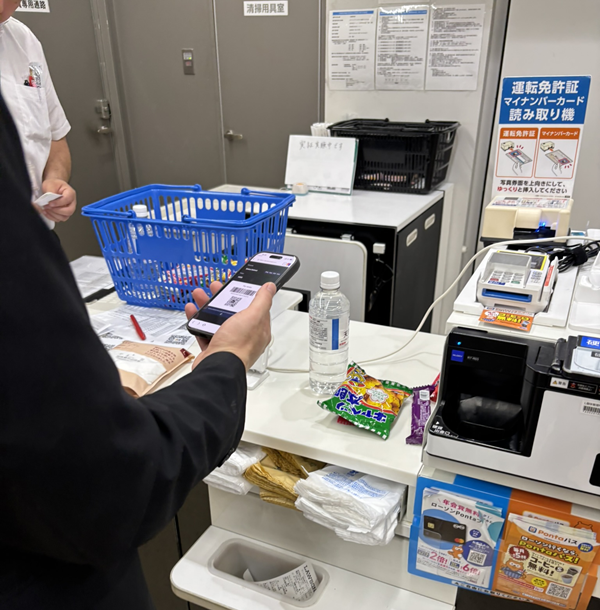
Lawson confirmed that at store POS registers, the barcode from a digital wallet displayed on a user’s smartphone is scanned using the CPM (Consumer Presented Mode) method, and the payment is completed via “PAYTREE,” a multi-code payment gateway service provided by Canal Payment Service, a gateway operator.

This experiment is intended as technical preparation for the future acceptance of stablecoins at retail locations. Taro Tamura, General Manager of Lawson’s Financial Company and Marketing Strategy Division, explained, “We hypothesized that this could be done using the same method as conventional barcode payments, and we were able to verify that.”Within Lawson’s Financial Company, the department oversees various cashless payment methods and is preparing to support new payment options. Through this POS trial, the company verified operational procedures and transaction speeds during payments.
Support
for Multiple Coins and Blockchains Verification with Multiple Partners to Build Expertise
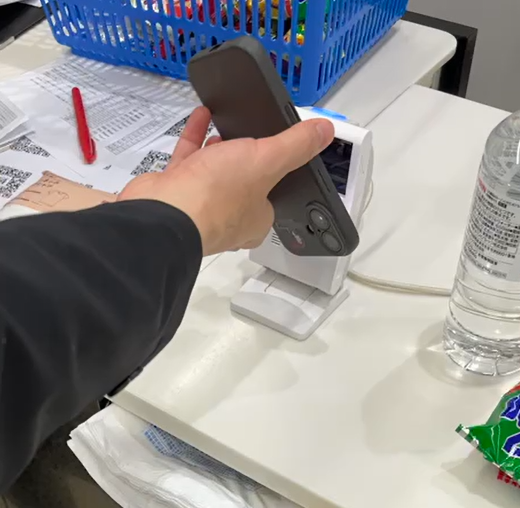
The pilot conducted on the 17th involved three participants, including representatives from NetStars and Lawson. Supported stablecoins included USDC and USDT (both on the Solana, Morph, and Polygon chains) as well as JPYC (on the Polygon chain), with MetaMask serving as the supported wallet.The companies verified in-store payments using stablecoins in conjunction with existing POS systems and confirmed that payments supporting multiple coins and blockchains functioned properly.

This pilot marks the second experiment involving a stablecoin-compatible POS system at Lawson.The first experiment was conducted with HashPort on August 4. Using HashPort’s “HashPort Wallet,” the company integrated “HashPort Wallet for Biz”—a stablecoin payment service for businesses and retailers provided by HashPort—into the convenience store’s POS system to accept stablecoin payments.The company also plans to conduct a third trial with a related business partner. Through trials with major operators, NetStars aims to deepen internal understanding and assess whether these efforts can lead to future initiatives.
In July 2026, NetStars launched “Stablecoin Pay”—Japan’s first service to support multiple stablecoin payments for retailers—as part of its multi-cashless payment solution “StarPay.”A key strength of this pilot is that the system is configured to operate with multiple wallets, multiple blockchains, and multiple stablecoins.
Leveraging
the Framework for Multi-QR Code Payment Implementation Payment Limits, Fraud Risks, and Economic Conditions…
In this experiment, Lawson’s POS terminals are integrated with “Stablecoin Pay” to verify whether stablecoin payments can be processed just like regular payment services. For integration into the POS system, the company leveraged the framework originally developed for implementing multi-QR code payments, noting that this serves as a key differentiator from competitors.
In addition to yen-denominated stablecoins, the company has confirmed that it can operate with globally circulated U.S. dollar-denominated stablecoins (USDC, USDT) while maintaining existing store operations. MetaMask is one of the most widely used Web3 wallets in the world.Users can store, send, and receive cryptocurrencies and stablecoins, and access various blockchain networks.
Specific points verified during the pilot included the integration of the POS system with “Stablecoin Pay,” payment processing using multiple stablecoins and blockchain networks, payment speed and user experience, the impact on store operations, and system behavior across multiple payment scenarios, including when errors occur.
With an eye toward the widespread adoption of stablecoins in retail stores—particularly in Japan—seamless integration with POS systems that manage product information is essential. Furthermore, the fact that the practicality of payments using multiple coins and blockchains was confirmed at convenience stores—which are frequented by many inbound customers from overseas as well as domestic customers—demonstrates the potential for stablecoins as a new payment option.
Furthermore, even for payments made with foreign-currency-denominated stablecoins, product pricing, sales management, and settlement are all conducted in Japanese yen. This allows merchants to process stablecoin payments without having to worry about exchange rates or managing cryptocurrencies.
Stablecoin Pay is a system that enables the use of stablecoins for in-store payments; it includes features that factor in the exchange rate between the dollar and the yen, as well as blockchain network fees (gas fees), and displays the total payment amount to the user’s wallet, such as MetaMask.
Stablecoin Pay’s transaction fee for merchants is 0.98% (tax-exempt).While HashPort offers the service for free, NetStars believes it is a sound business strategy to charge a fee, given the commercial nature of the venture. NetStars is also expanding the range of supported wallets, with new additions scheduled for release soon. The company’s strength lies in launching with multi-wallet support, and it aims to maintain seamless integration moving forward.
Since the launch of Stablecoin Pay, the company has reportedly received numerous inquiries not only from major merchants but also from small and medium-sized merchants. Market anticipation and enthusiasm are on the rise. Regarding cash management, the system employs a post-payment receivables assignment scheme, meaning NetStars bears the risk in the event of fraud.Due to the Foreign Exchange and Foreign Trade Act, the maximum transaction limit is set at 2 million yen. Hisahiro Nagafuku, Director, COO, and Head of the Business Management Division at NetStars, stated, “ I think it would be acceptable to implement eKYC (electronic identity verification) in such cases.”
Lawson reportedly plans to consider introducing stablecoins in light of future market needs and other factors. While the company supports numerous code-based payment services and is accustomed to handling them, it hopes to consolidate and simplify its approach to stablecoins as well. Additionally, the company noted that economic conditions will be a key factor in the decision to adopt stablecoins.