August 21, 2026, 8:00 a.m. (JST)
[Japan] PayPay, the operator of PayPay Points, is working to attract younger users by launching campaigns targeting teenagers who are just starting to use smartphones. With PayPay’s registered user base surpassing 75 million, the company believes that attracting younger users is key to acquiring even more new users.Furthermore, the company aims to encourage existing users to complete identity verification (eKYC) so they can take advantage of a wider range of services.We spoke with Nozomi Nakagawa (Director of Public Relations, PayPay Securities) and Mayuka Matsumoto from the Corporate Communications Department (Public Relations), Management Promotion Division, Corporate Headquarters at PayPay, who explained the status of the company’s points and membership services.

“PayPay” Registered User Base Surpasses
75 Million Used by About Three-Quarters of Smartphone Users
As of August 9, 2026, the number of registered users for the cashless payment service “PayPay” has surpassed 75 million. This represents more than one in two people in Japan and approximately three out of every four smartphone users.
Furthermore, PayPay views the promotion of identity verification (eKYC) as one of its key initiatives to combat criminal activity and fraud, as well as to strengthen measures against money laundering and terrorist financing.The number of users who have completed identity verification has exceeded 43 million (as of July 2026), and the company is continuing to strengthen its safe and secure financial platform.
Mr. Matsumoto said, “When we first launched the service, we ran large-scale campaigns, but now we tailor our campaigns to align with PayPay’s current strategic priorities. A key feature of our program is that heavy users can earn points at a higher rate.”
Strengthening
Engagement with Young People Aged 12 to 18 to Sustain Growth Attracting Users with Additional Points Beyond the Standard Rate
Among these efforts, PayPay is focusing its efforts on the 12- to 18-year-old demographic. With approximately three-quarters of smartphone users now registered with the service, the company believes that reaching young people who are just starting to use smartphones is key to acquiring new customers.
As a specific initiative, the company has been running the “PayPay U18 Support Project,” aimed at 12- to 18-year-olds, since March 2026.The program offers a system that allows users to meet the “PayPay Step” requirements with lower thresholds than usual and makes it easier to earn points through top-ups (*1) and bank account linking (*2).
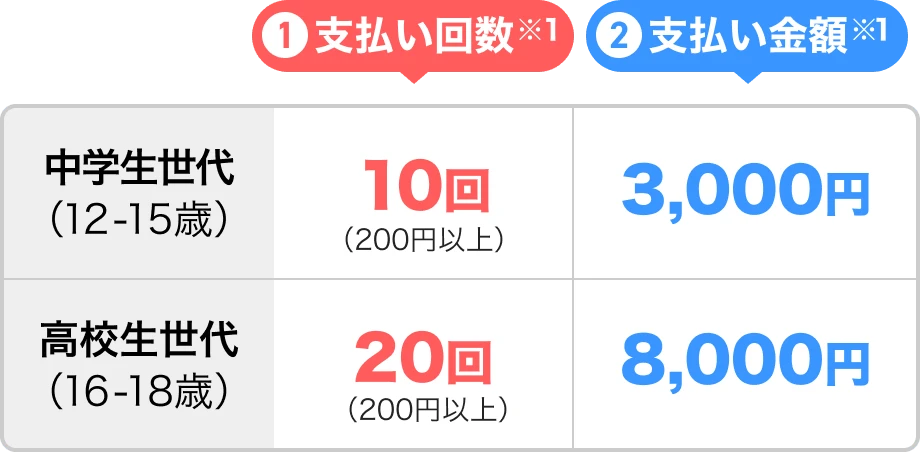
Additionally, when users aged 12 to 18 who have completed identity verification (eKYC) receive pocket money via PayPay, they earn up to 10% in PayPay Points on the amount each month (subject to a cap). They also earn 1% when they top up their account with 2,000 yen or more via an ATM or bank and use it for a payment,and if they use PayPay Bank, they’ll receive a total of 2% (*1). In addition, if a PayPay user aged 18 or older introduces PayPay to someone aged 12–18 who then becomes a PayPay user, both parties will receive points in addition to the standard referral rewards.
*1 This promotion may end without prior notice. / *2 This promotion will run through September 30, 2026.
Mr. Matsumoto said, “Many children start carrying smartphones around the time they enter the upper grades of elementary school and begin attending cram schools, and the service is primarily used by having parents send money (*3) to them. Because PayPay’s money transfer feature is so convenient and allows for real-time transfers even from far away, users find it very easy to use.”
*3 Sending a balance from PayPay Money is classified as a “transfer,” while sending a balance from PayPay Money Light is classified as a “transfer of funds.” For details, please refer to the PayPay Balance Terms of Use.
Encouraging
“Usable Points” Users to Become Heavy Users Increased Points Award Rate with PayPay Step
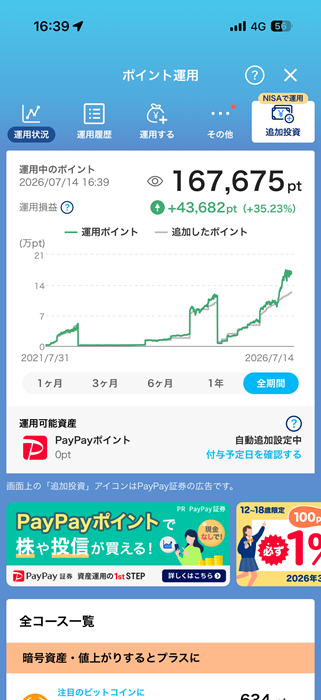
Mr. Matsumoto stated, “The strength of PayPay Points is, above all, their ease of use. While you might not notice much difference compared to other companies’ points in urban areas, PayPay is accepted at many stores in rural areas as well. The fact that points can be used just as easily as in the city is a major strength unique to PayPay.”
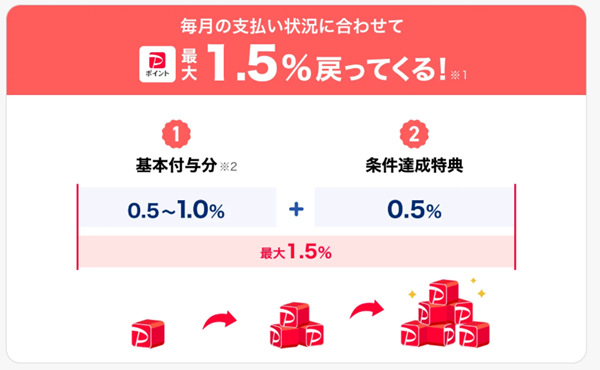
Leveraging its strength as a “usable points” system, the company is implementing initiatives aimed at encouraging existing users to become heavy users. For example, “PayPay Step” is a program that increases the points accrual rate for purchases made with PayPay based on the previous month’s usage and the fulfillment of certain conditions.In addition to the base award rate, meeting certain conditions allows users to further increase their award rate for the following month.
Specifically, the conditions for increasing the PayPay Step point accrual rate by +0.5% include completing identity verification (eKYC) and, between the 1st and the last day of the previous month, making “at least 30 transactions of 200 yen or more each” with a “total amount of 100,000 yen or more.”
While PayPay’s identity verification (eKYC) isn’t strictly required to use all features, the point-earning conditions for “PayPay Step” will change starting June 2, 2026—meaning users who haven’t completed identity verification will no longer be able to earn points, effectively making it mandatory.
There are 43 million users who have completed identity verification (eKYC), and since verified users receive more advantageous services, they often become heavy users. For example, once you verify your identity with PayPay, you can top up your account from a bank account or withdraw your balance, and your usage limit will be raised.Additionally, they benefit from higher money transfer limits, eligibility to participate in specific campaigns, and rapid full reimbursement in the event of fraud.
PayPay Promotes
Identity Verification to Enable Point Redemption in Financial Services Expanding Customer Base Through Partnership with 7-Eleven
The PayPay Group is working to enhance its financial services. PayPay Bank is an internet bank formed in 2021 through the rebranding of Japan’s first online-only bank, formerly known as “Japan Net Bank.” It is closely integrated with PayPay, allowing users to check their account balances, top up their accounts, and make withdrawals via the app—all free of charge.Additionally, PayPay Securities is a smartphone-focused brokerage firm that allows users to purchase shares of well-known Japanese and U.S. companies and mutual funds starting from 100 yen, in increments of 1 yen. It can be easily accessed from the PayPay app, and users can also invest their accumulated points.
PayPay’s identity verification process makes it convenient to use these financial services and broadens the range of ways PayPay Points can be utilized. Having captured three-quarters of smartphone users, PayPay’s strategy is to attract younger users and encourage them to become heavy users, while simultaneously expanding the range of services where points can be redeemed.
Additionally, on July 31, 2026, PayPay entered into a strategic partnership with Seven & i Holdings and 7-Eleven Japan. As a partner in this business model transformation, PayPay will be responsible for strengthening 7-Eleven’s digital customer touchpoints.According to the company’s annual estimates, approximately three years after the integration of Seven-Eleven Japan’s IDs, the volume of payment-related data—including non-PayPay transactions—is projected to reach 18 billion transactions per year.Although still in the exploratory phase, it is expected that combining PayPay’s customer base and data with services such as “7NOW” and mobile ordering will enable more effective outreach to potential customers.
Mr. Nakagawa stated, “I believe the role of PayPay Points is to expand the number of places where they can be used and to provide solutions that help address the challenges faced by Merchants. I believe it is important to continue building on these efforts.”