November 25, 2026, 9:00 a.m. (JST)
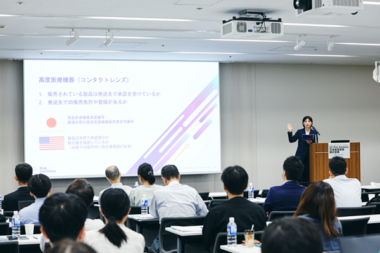
[Japan] Japan’s payment environment presents unique challenges, including unapproved pharmaceuticals and medical devices, exaggerated advertising, multi-level marketing schemes, adult content, and fraudulent websites. To effectively manage merchants, it is essential to thoroughly understand and comply not only with domestic laws but also with the ever-evolving regulations of global card brands.Drawing on over 20 years of merchant monitoring experience and industry-leading detection technology, G2 Risk Solutions will explain how to identify the sophisticated tactics used with high-risk products. We will also share practical know-how and the latest trends for preventing violations from both the perspective of international card brand regulations and domestic laws, as well as for preventing transaction laundering.(Excerpt from a presentation at the “Payment Security Forum 2026 Fall” held on September 25, 2026)

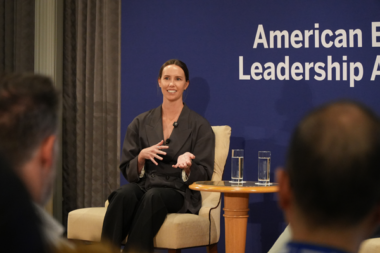
Ms. Hiromi Okazawa, General Manager, Japan, G2 Risk Solutions
Over 20 Years of Expertise
in Merchant Monitoring Early Detection of Fraud, Including Prohibited Merchandise, to Reduce Risk
Today, I will be speaking on the topic of “Preventing Fraud That Exploits Blind Spots in Merchant Screening.”
First, let me briefly introduce G2 Risk Solutions. G2 Risk Solutions provides merchant risk management services to Payment Service Providers, banks, PSPs, marketplaces, and others. We have been conducting merchant monitoring for over 20 years and were the first company to receive certification from international card brands for our merchant monitoring program.
As the longest-standing player in the merchant monitoring field, we possess a vast amount of proprietary data. A key feature of our service is that we conduct monitoring by leveraging our extensive historical merchant data. We were previously known as G2. We have also merged with companies such as WebShield and EverC, which are now part of G2 Risk Solutions.
The primary objective of G2 Risk Solutions’ services is to detect problematic merchants early on and thereby reduce the risk of compliance violations and fraud. For example, during the initial screening of new merchants, we analyze the website and business operations of the applicant to determine whether the business poses a high risk.We verify whether prohibited items are being sold on the website and whether there are any covert connections to sites dealing in online gambling, adult content, counterfeit goods, or other regulated products.
We also examine information from web traffic and review sites, quantify it, and provide the information in a format that clearly illustrates the risk. Since a Merchant’s business operations or the products offered on its website may change after the contract is signed, we conduct ongoing monitoring. If a problem is detected, we notify the client by providing screenshots and information explaining the rationale for why the Merchant is considered high-risk.We also detect risks such as merchant impersonation—including transaction laundering—and the discovery of hidden affiliated sites.
We monitor a wide variety of merchants on a daily basis. Today, I’d like to discuss recent developments in Europe and the United States and how they relate to the Japanese market from a risk perspective.
First, I’ll discuss the legal background, specifically the importance of understanding the national laws that form the basis for international card brand rules. International card brand rules prohibit the use of card networks for illegal transactions. They also encourage continuous monitoring to verify proper merchant registration, business category classification, and licensing, as well as to check for any newly added problematic content.
To fully understand these international card brand rules, it is important to review not only the laws of each country but also the risk management standards and regional rules established independently by the card brands themselves. Since legal and social issues arising in Europe and the U.S. can sometimes influence card brands’ risk management policies, it is crucial to manage Merchants in accordance with international standards.
There are also laws and challenges specific to Japan. It is common for something that is illegal in Japan to be legal in the United States, and vice versa. It is crucial to maintain both perspectives: avoiding problems in Japan while also mitigating risks according to international standards.
Issues
Unique to Japan in Pharmaceuticals and Medical Devices Advertising Unapproved Prescription Drugs as “Personal Import Agency Services”
I would like to focus on healthcare, pharmaceuticals, and medical devices as sectors where issues can become extremely serious when they arise. For pharmaceuticals and medical devices, there are two key points to consider during Merchant screening. First, is the pharmaceutical product being sold approved in the destination country? Second, does the seller hold a sales license or registration in the destination country?When selling pharmaceuticals to Japan, you must verify whether the product is approved in Japan and whether the seller is qualified to sell the drug in Japan. When shipping to consumers in the United States, you must confirm whether the seller is registered as a pharmacy in the U.S. and has received FDA approval.
On the other hand, a particularly troublesome issue unique to Japan is the system known as “personal import agency services.” This system is often interpreted too broadly, and there are many cases where websites that are actually considered illegal claim, “We are a personal import agency, so we are operating legally.” A typical example is when such agencies advertise and sell prescription drugs that are not approved in Japan under the guise of personal import agency services.
While Japan does have a system allowing individuals to import pharmaceuticals for personal use, this is subject to specific conditions regarding the types of products, quantities, procedures, and advertising restrictions.Even if a business claims to be a “personal import agency,” if it is actually illegally advertising unapproved pharmaceuticals or if the operator is substantively involved in sales and shipping, this may constitute a violation of the Pharmaceutical and Medical Devices Act (Act on Securing the Quality, Efficacy, and Safety of Pharmaceuticals, Medical Devices, and Other Products). Here, we will introduce some examples of unapproved pharmaceuticals actually being sold to Japanese consumers.
A drug called “Kamagra,” manufactured in India, contains sildenafil—the active ingredient in Viagra—and is an unapproved drug in Japan. The contraceptive pill sold as “Marvelon” is also a product frequently sold through personal import services.Since pharmaceuticals sold through personal import come from overseas, a common characteristic is that their product packaging is not in Japanese. While the drug “Marvelon” itself is available in Japan, versions with Thai-language packaging are not approved for use in Japan.
Careprost, a drug manufactured in India, was originally developed as eye drops for glaucoma. However, because it has the side effect of promoting eyelash growth, it is often purchased for cosmetic purposes. Indian-made Careprost and Turkish-made versions with Turkish packaging are sold online.
This raises the question of whether unapproved medications with foreign packaging are the same as approved products with Japanese packaging. Unscrupulous sellers claim, “They’re the same because the ingredients are identical.” However, fundamentally, medications with foreign packaging have not received drug approval in Japan and are therefore unapproved in Japan.The quality of the products themselves is not guaranteed. There is also a risk that counterfeit products may be mixed in.
In addition to these, injectable medications such as GLP-1 for weight loss and finasteride—an oral medication for hair regrowth—are also commonly found online.The issue of unapproved drugs and unapproved prescription medications is particularly prevalent in areas classified as “lifestyle improvement drugs”—such as weight loss, beauty treatments, erectile dysfunction (ED), hair regrowth, and birth control pills—rather than for treating specific illnesses. This is especially noticeable in the field of private medical care. Since these treatments are not covered by health insurance, patients must pay the full cost out of pocket, making them relatively expensive; this context makes consumers more likely to be drawn to cheaper alternatives.
The problem with personally importing medications is that the products are not approved in Japan to begin with. In Japan, the drug approval process is extremely rigorous. Numerous clinical trials are conducted to verify efficacy by collecting data on safety and side effects. Furthermore, there are very detailed and strict regulations governing manufacturing methods, packaging, storage, and distribution.
Extremely Dangerous Unapproved Medicines
In some cases, ingredient tests have shown levels 10 times the standard limit
While there is a process in which the Ministry of Health, Labor and Welfare grants approval only after numerous safety standards are met, unapproved overseas products have not undergone any of these processes, meaning their safety is not guaranteed. In fact, extremely unsanitary manufacturing sites have been discovered where counterfeit drugs are produced by mixing dyes in buckets.
When products sold through personal import are tested, their quality varies wildly; some are counterfeit, some contain almost no active pharmaceutical ingredients, and conversely, some contain levels 5 or even 10 times the standard when tested. This is extremely dangerous.
The medication I mentioned earlier as an example contains prescription drug ingredients. Prescription drug ingredients are supposed to follow a process where a doctor examines the patient, issues a prescription, and the patient receives the medication from a pharmacist. However, in the case of personal imports, this entire process is completely bypassed, and the products are sold directly to Japanese consumers from overseas.
This is extremely dangerous for consumers as well; if they suffer health damage from personally imported pharmaceuticals, they are not eligible for the government’s official compensation system for adverse drug reactions. Since these products are not regulated by the Ministry of Health, Labour and Welfare, consumers cannot receive compensation. So, how should merchants that handle pharmaceuticals be screened? There are two criteria.
First, if the product is being sold to Japan, you must verify whether it is approved in Japan.Second, check whether the seller holds a license to sell pharmaceuticals. For example, if a website is selling to Japan, verify whether the medication is approved in Japan and whether the seller holds a Japanese pharmaceutical sales license. It is important to confirm that the seller has a pharmacy license for prescription drugs and a retail sales permit for over-the-counter (OTC) medications.
One point to note here is that just because a pharmacy is licensed in Japan does not necessarily mean it complies with regulations. For example, there are cases where a licensed Japanese pharmacy, despite holding a valid license in Japan, sells pharmaceuticals overseas. Japanese pharmaceuticals are popular among people living in China, South Korea, Asia, Southeast Asia, and Asian communities in the United States.
Even if a pharmacy holds a license in Japan, selling products overseas poses a significant problem. For example, if a Japanese pharmacy sells to consumers in the United States, from the U.S. perspective, this constitutes the illegal sale of unapproved pharmaceuticals—which have not received the necessary approvals in the U.S.—without a U.S. sales license.
During merchant screening, we cannot automatically approve a merchant simply because it holds a sales license in Japan; we must verify where the products are being shipped. Whether a merchant ships overseas is not always visible from a Japanese IP address. For example, through a process called “geotargeting,” accessing the site from a U.S. IP address may trigger a message indicating that the merchant ships internationally.
AI Also Picks
Up on Fraudsters’ Online Arguments The Indispensable Judgment of Experienced Professionals in Merchant Screening
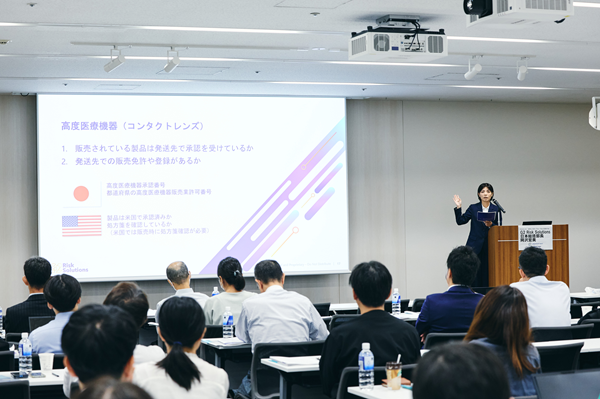
Another common source of trouble for merchants is contact lenses. Let’s consider a specific scenario. For example, suppose a contact lens seller applies for a credit card merchant account.
Looking at the Merchant’s website, it appears quite polished and gives the impression of being trustworthy. However, in a small, hard-to-see spot, it says “personal import.” At this point, I want you to think, “Oh, wait.”Clicking on the store information reveals an address in Singapore. In the FAQ section, it states, “Personal imports can be used almost exactly the same way as regular online shopping.”
I’ve been saying that “you should be cautious about personal imports.” However, websites like this one claim that “it’s fine.” I imagine many of you are wondering which side is correct and might be tempted to ask an AI.
So, I asked the AI whether the personal import of contact lenses is legally permissible. When I asked, “Is it legal to sell contact lenses directly to individual Japanese consumers from overseas via a website as a personal import?” the AI replied as follows:
“Selling contact lenses directly to Japanese consumers from overseas via a website as personal imports is legal. It falls outside the scope of Japanese law, or enforcement is extremely difficult.”The AI stated that the condition for this to be legal is “having a base of operations overseas.” Since the AI stated that it is legal only if there is a base of operations overseas, and the website lists an address in Singapore, suppose you were to pass the Merchant screening process based on this AI’s advice. This would be extremely dangerous.
Much of the information general AI systems gather from the internet is highly inaccurate, and unscrupulous operators tend to write interpretations that suit their business interests and claim their operations are legal. This is a very serious problem and is extremely dangerous from both the perspective of Merchant management and consumer protection.In fact, under Japanese law, displaying overseas highly regulated medical devices—in this case, unapproved contact lenses—on a website is considered a violation of Article 68 of the Pharmaceutical and Medical Devices Act, which prohibits the advertising of unapproved pharmaceuticals and medical devices.
When I entered the following into the AI again: “Selling contact lenses from overseas directly to Japanese consumers via a website as personal imports inevitably constitutes advertising of unapproved pharmaceuticals and unapproved medical devices, so this violates Article 68 of the Pharmaceutical and Medical Devices Act, correct?” the AI replied, “You are correct; it inevitably constitutes a violation.”
As this example shows, relying on general-purpose AI tools is extremely risky. Since the responses from such AI tools are based on general online sources rather than specialized data, they may not provide the information necessary for Merchant screening; instead, they may present claims written by unscrupulous operators to suit their own interests as if they were facts.AI becomes far more reliable when its output is based on appropriate data and is actually verified by experts. At G2 Risk Solutions, we also utilize AI, but our system leverages over 20 years of Merchant monitoring data, and we place great importance on a workflow where analysts verify the analysis results with their own eyes before making a judgment.
Earlier, I mentioned that there are two verification points regarding pharmaceuticals; the legal framework for contact lenses is essentially the same.First, is the medical device being sold approved in the destination country? In the example I mentioned earlier, since the product is being shipped from Singapore to Japan, the question arises as to whether it is approved in Japan. If it is approved in Japan, it should have a product approval number and an approval number as a highly regulated medical device.
The second point is the shipping destination. In this case, the question is whether the seller holds a sales license in Japan. A legitimate contact lens seller should display their business approval number—the prefectural “Highly Regulated Medical Device Sales Approval Number”—on their website.In the example mentioned earlier, only a Singaporean address was listed, and the prefectural sales approval number was not displayed. As you can see, there are key indicators for identifying fraudulent vendors and specific points to check. It is clear that the website listing this Singaporean address has issues from both of these perspectives.
Even if a seller holds a prefectural sales license for highly regulated medical devices, shipping contact lenses to the United States can lead to very serious problems. For example, the sale of contact lenses in the United States is subject to very strict laws. While a prescription is not required for contact lenses in Japan, it is mandatory in the United States.If a Japanese vendor ships contact lenses to the U.S., it could constitute an illegal sale—specifically, selling contact lenses to the U.S. without requiring a prescription. Therefore, it is extremely important to verify the destination of the shipment.
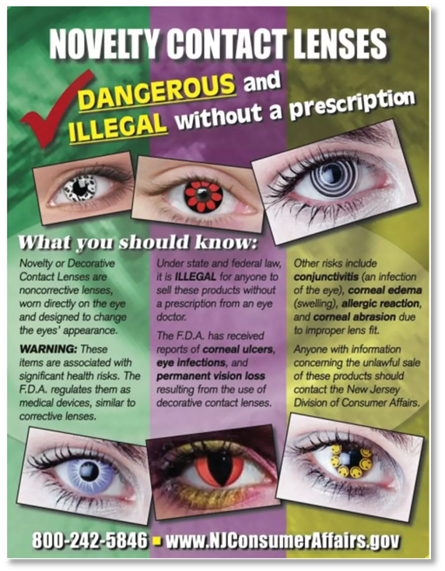
Non-prescription contact lenses were previously classified as general merchandise in many countries. In Japan, too, they were not considered medical devices in the past; however, due to concerns over a high number of health hazards, contact lenses are now classified as medical devices in Japan, the U.S., and the EU—including non-prescription contact lenses.During the Halloween season, contact lenses are often included in packages along with costumes. Caution is advised, as such items may be imported from Southeast Asia or China. U.S. government agencies have also issued warnings regarding this.

■Contact
Information  G2 Risk Solutions
Address: 111 Anza Blvd, Burlingame, CA 94010, USA
URL: https://g2risksolutions.com
Email: japan@g2risksolutions.com