October 27, 2026, 8:00 a.m. (JST)
[Japan] Orient Corporation (Orico) was one of the first in its industry to focus on corporate services, creating popular products such as the invoice card payment service (OBS).In June 2026, the company released “mitosel,” an app designed to support cash flow management for small and medium-sized business owners and sole proprietors. Currently, the company is working diligently to gather feedback from the field in preparation for the release of Phase 2, which will feature expanded functionality. We spoke with Orico—which has announced a medium-term management plan with a target date of 2030—about its corporate strategy.
Corporate Strategy Remains
a Major Pillar of the Mid-Term Management Plan Plans to expand corporate card accounts from 160,000 to 440,000
Orico is one of the credit card companies that has focused on corporate customers and pursued strategies in this area from an early stage. The company’s strategy is characterized by its focus on small and medium-sized enterprises (SMEs) and sole proprietors.
As of the end of March 2025, the company had 160,000 active corporate card members. In the medium-term management plan announced in May 2025, the company aims to increase this number by 280,000 to 440,000 by the end of 2030, targeting a market share of over 10 percent.Furthermore, the transaction volume for the company’s corporate cards as of the end of March 2025 was 166.3 billion yen. Under the medium-term management plan, the company aims to increase revenue from its overall corporate strategy by 11 billion yen in three years and by 24 billion yen by the end of March 2030, five years from now.
The company’s corporate services include, for example, the “Invoice Card Payment” (OBS) service, which was launched in 2023.This service meets the so-called “deferral” needs by allowing customers to pay invoices received from business partners using a credit card. Furthermore, in its B2B payment (accounts receivable factoring) service, the company recorded 312.5 billion yen in factoring volume as of the end of March 2025, representing a 107% increase compared to the previous fiscal year.The service offers a credit limit of up to 10 million yen (5 million yen for sole proprietors), and the three industries with the highest usage are building materials wholesalers, food and beverage wholesalers, and gas stations.
The philosophy behind “mitosel,” a cash management support app for SME owners and sole proprietors, is to bundle and seamlessly provide various corporate services—including corporate credit cards and loans—that were traditionally offered separately, adopting a user-centric approach rather than a product-centric one.
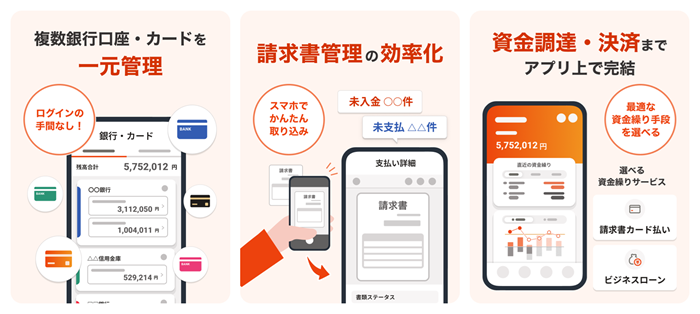
Check
your financial status at a glance on the home screen Instant access to cash flow management services
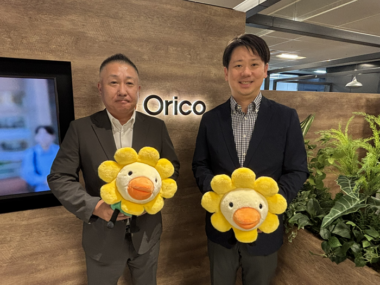
“We have conducted numerous interviews with business owners over the years. Many of the SME owners we target are dedicated to their core businesses while also managing their own books and handling their cash flow themselves.A common challenge they all face is optimizing cash flow and managing their finances” (Shinichi Shinozaki, General Manager of Payment Product Development, Consumer Payments Division, Orient Corporation).
Consequently, in collaboration with Money Forward X—which specializes in aggregation systems that consolidate and manage information from bank accounts, credit cards, and other sources—the company began developing a solution to address these challenges.
During development, the company defined several user personas. One example is a sole proprietor running a construction business. Finding time between his main work, he issues invoices and ponders payment deadlines even while on the go.“We thought that for business owners like this, an app-based approach would be better than a browser-based one,” said Mr. Shinozaki. They also placed great emphasis on creating a user-friendly UI and UX.
“mitosel” released Phase 1 in June 2026. It features an open design that anyone can use, regardless of whether they have an account with Orico.
In terms of functionality, it consolidates and manages information from bank accounts, credit cards, and invoices. Users can check upcoming payments and get a handle on their future cash flow. Invoices can be registered as images or PDFs, and the extracted information is automatically reflected in the payment schedule. The home screen allows users to see their current balance and upcoming cash flow at a glance.
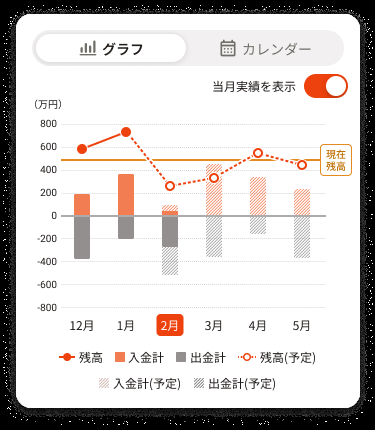
Information on registered accounts, cards, and invoices is centrally managed via a calendar. Additionally, users can instantly access cash flow management services and easily apply for invoice card payments (OBS). With online lending, users can check preliminary screening results on the spot and proceed directly to the application process.
The company believes that the current functionality of “mitosel” is still insufficient. It plans to release Phase 2—which will include invoice creation and cash flow simulation features—by November of this year, and Phase 3—which will feature recommendations for optimal cash flow management—around May 2027.“mitosel” aims to be adopted by 120,000 companies within three years.
The AI credit assessment model is also performing well.
Could “mitosel” eventually be offered as a white-label solution?
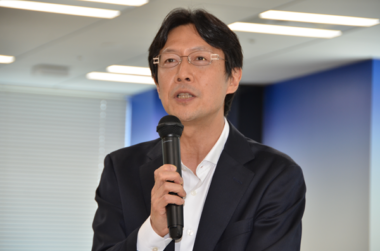
Money Forward X, which has become a joint development partner for “mitosel,” develops and operates not only “BANK Biz,” a corporate service platform for regional financial institutions, but also“Cashmap,” a corporate cash management and optimization portal provided by JCB. “All of these are products and services centered on cash flow management that utilize our aggregation platform. We will operate them by integrating and complementing their functions while leveraging each company’s strengths,”(Manami Tanaka, Public Relations Officer for Money Forward X, Money Forward Public Relations Office). Mr. Shinozaki of Orico also noted, “Although there are elements of competition among the three companies, we have established an extremely positive collaborative relationship.”
Orico and Money Forward X have also collaborated on the development of an AI-based credit assessment model. JCB was the first company to adopt this model. Unlike traditional credit assessments, which relied almost exclusively on financial statements, the AI-based system incorporates recent deposit and withdrawal data into its evaluations. Naturally, this process is much faster.Currently, the assessment results are derived with some human intervention, but with full automation in mind and a focus on improving assessment accuracy, the companies are actively working on research projects aimed at advancing corporate credit assessment.
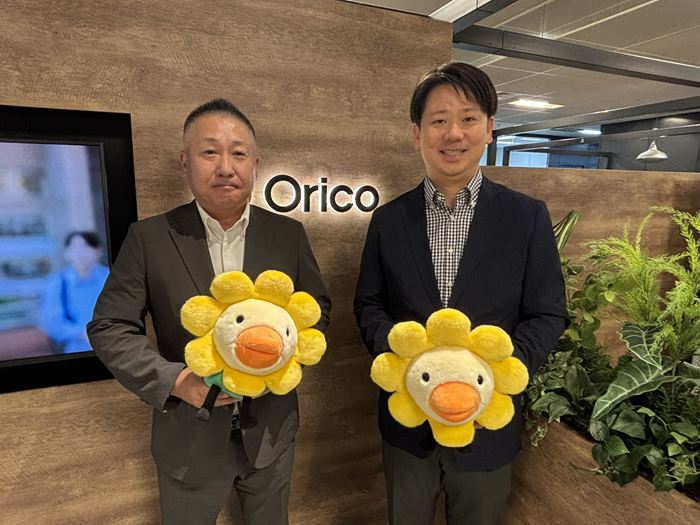
Japan’s population decline is an unavoidable reality.“Companies that have focused on B2C businesses are now at a turning point where they must also turn their attention to B2B. However, our core business has always been B2B2C, and our Merchants are corporations. We believe this is where our greatest strength lies,” said Hiroto Sakairi, General Manager of Business Solutions Development in the Corporate Business Division.
Orico Card has 910,000 merchants. “First, we need to make our merchants aware of Orico’s corporate services, including ‘mitosel.’ I believe the first step is to firmly engage with this Orico network—this Orico Ecosystem—and establish a strong foothold there,” said Mr. Sakairi.Furthermore, Mr. Sakairi outlined future plans, noting that the company is currently assessing demand with an eye toward offering “mitosel” as a white-label solution by leveraging its network of financial institutions.
For now, we have high hopes for the release of “mitosel” Phase 2 in November.