November 20, 2026, 8:00 a.m. (JST)
Entering Card Numbers into AI Is Not
Ideal Agentic Commerce Also Uses Tokens
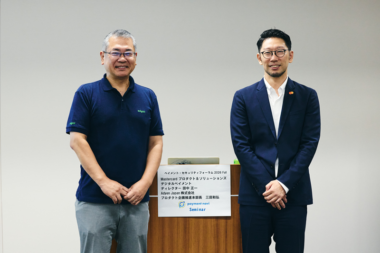
Mita: You mentioned something like “Agentic Token,” but if an agent makes a purchase without authorization, there’s a risk that the Issuer will be held liable and charged to the member.Given that Mastercard aims to eliminate the need to enter the PAN—the 16-digit card number—by 2030, please explain how Agent-driven Commerce will enable users to make token-based transactions and payments using Agent-driven Tokens.
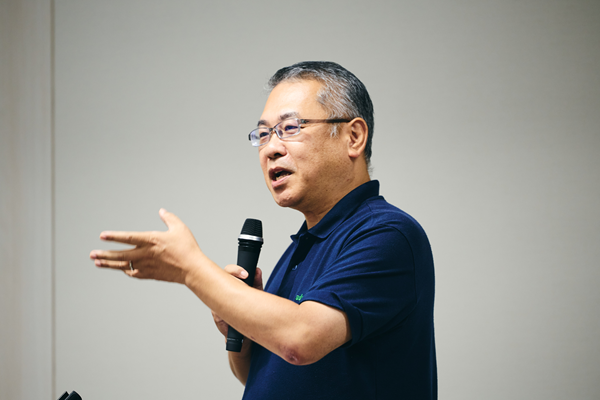
Tanaka: I think this is a very important point. To put it simply, I don’t believe it’s ideal for users to enter their 16-digit card numbers into an AI system for agent-based commerce.There’s a possibility that the AI could malfunction, so I’m concerned about the security risks involved in entering a 16-digit number. That’s why I think it’s better to eliminate the need for manual input altogether. However, this isn’t limited to Agentive Commerce; Mastercard plans to phase out manual entry of 16-digit numbers for all online payments.
Mastercard’s vision is to store a token in the “Mastercard Credential Directory” at the time the card is issued.Whether it’s guest checkout, traditional card payments, or agent-based commerce, our goal is to provide a token and have it used instead, thereby eliminating the need to enter the 16-digit card number and preventing data leaks.
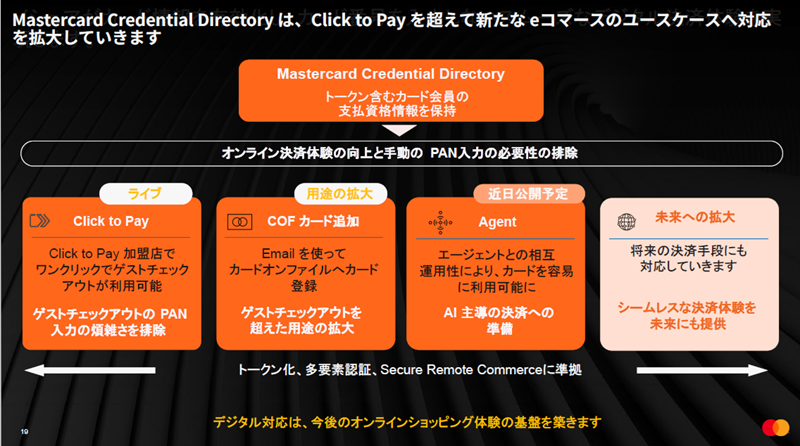
Mita: The term “Secure Remote Commerce (SRC)” was popular for a while, but the Credential Directory is now serving as SRC and is intended to handle the payment aspect of agent-based commerce.
I’d like to ask three more specific questions. First, as various AI agents emerge in the future, how will brands verify their reliability? Second, I believe it’s extremely important to ensure the person making the payment is the account holder—how do you plan to guarantee this? Third, regarding “Intent” (the mechanism of API objects that manage intent), could you explain who verifies and approves it, and how it proceeds to payment?
Shopper Consent and Intent
What information is needed to verify this?
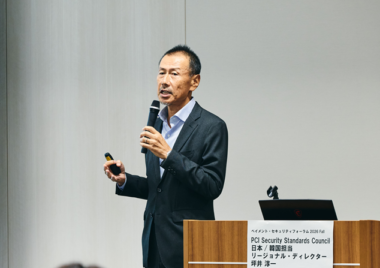
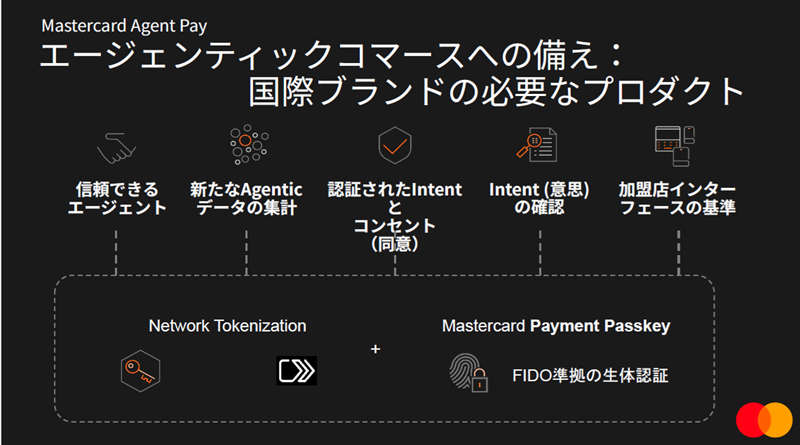
Tanaka: Regarding the first point—the reliability of AI agents—to put it simply, I believe some form of agent certification will be necessary. This isn’t limited to agents; in the past, we’ve already required EMV chip certification and terminal certification. Mastercard also sets certain standards for providers offering digital wallets.I believe it is necessary to establish certain standards for agents as well and require them to participate in Agent Pay.
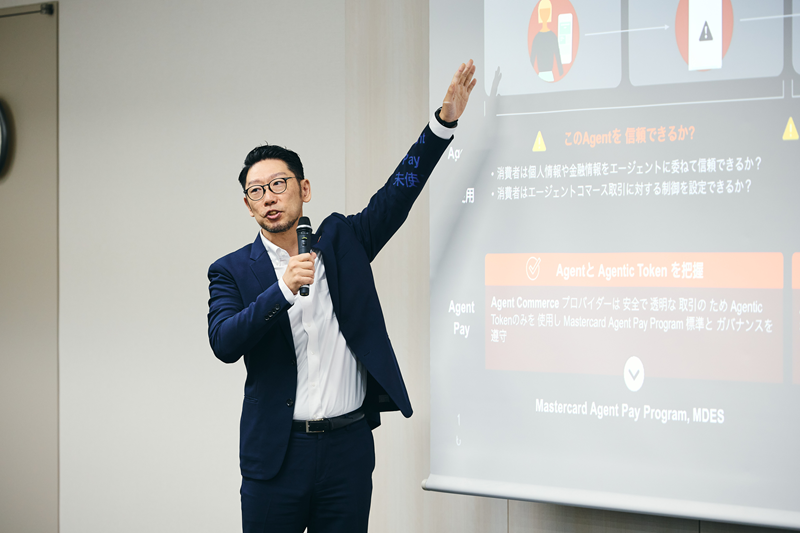
Mastercard has a feature called “Verifiable Intent.” Regarding this, as information accompanying the payment, we will digitize three types of data—who made the purchase, what intent was sent to which agent, and, in the case of an autonomous purchase, what was ultimately purchased—in a format that allows for cryptographic verification at a later time.
Before a purchase is made, consent is obtained to confirm that the details are correct, and in a sense, this is cryptographically “electronically signed.” This allows for verification later on to confirm that “it was indeed as stated.”
As for confirming consent for the intent, biometric authentication is currently the most practical method, and for transactions that utilize such mechanisms, we envision using agentic tokens as the means to facilitate them.
Mita: I believe that intent is the core issue from the Merchant’s perspective. Until now, payments have been about money transactions through payment networks. While there are details like size, color, and the specific item of clothing a customer wants to buy, will you, as an international brand, go so far as to ensure Merchants can verify that proof—or even delve into the specifics of the transaction itself?
Tanaka: I think you’re correct in principle. With Agent-Based Commerce, proving “Did the customer really buy what they intended?” becomes crucial.
We’re operating under a standard where the necessary information from “Verifiable Intent,” as I mentioned earlier, is visible to both Merchants and Issurers.
Mita: So, merchants will be able to confirm whether a customer “wants to buy this” after that person has obtained consent from the AI agent. A major issue here is this: based on what you just said, merchants can see the intent, consent is provided by the AI agent, and even the Issuer can verify it—but what about liability?
Who bears the liability?
Establishing New Rules for Agent-Based Commerce
Tanaka: From the Acquirer’s perspective, it would be ideal if everything were handled by the Issuer, but I don’t think it’s that simple.Once people start shopping using AI agents, things will become quite complex. The existing rules—which ask, “Does liability lie with the Issuer or the Acquirer?”—will no longer work. Since there’s a third party, such as an AI, between the Issuer and the Acquirer, more complex scenarios will arise, such as: “If the AI runs amok and makes a purchase, whose responsibility is it?”
Mastercard is aware of this, which is why we’ve implemented “Verifiable Intent” to enable tracking and use “Agentic Tokens” to identify transactions made by agents. We believe it’s necessary to restructure the rules regarding liability and chargeback disputes in preparation for this.However, since new use cases are still emerging, the honest truth is that the rules themselves are still under consideration.
Mita: Finally, let’s summarize from the perspective of agent-based commerce and security. At present, agent-based commerce has progressed to the point of product search and in-chat payments.Nevertheless, given the current trend of increasing traffic, purchases, and sales volume via AI agents, discussions on Agent-based Commerce have so far focused primarily on the search for our own products. However, as we move toward in-chat payments, we realized we need to examine the big picture—specifically, what kind of transactions ultimately take place via card payments—which is why we organized this session.
During the session, what we recognized from Mastercard’s presentation is that such a product is necessary. In addition to verifying certified AI agents and implementing tokenization, it is crucial for the payment passkey to authenticate the user’s identity in order to obtain consent. We also learned that the concept of “intent-based consent” and mechanisms to implement and verify it will be necessary.
Preparing
for the Age of Agent-Driven Commerce Updating the Entire Payment Ecosystem
Another question I’d like to ask is: In Japan, do you think this is something that needs to be implemented by merchants—or rather, by PSPs and Acquirers—or is it something that AI agents should implement? Could you share your thoughts on this?
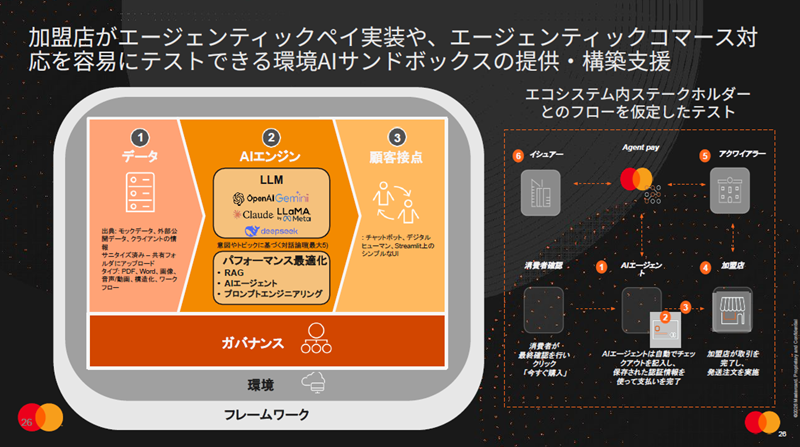
Tanaka: Since AI agents and intent-based consent are fundamentally driven by the interactions between agents, and since card information will ultimately be entrusted to the agent, I believe the agent, the Acquirer, the PSP, and other stakeholders will need to collaborate to build this together.
It’s not just a matter of one player developing the solution; with agent-based tokens, Issuer will receive additional information, Acquirers will be involved, and the Merchant interface may change. While the level of effort required will vary across the ecosystem, I believe everyone will need to take some kind of action to adapt.
Mita: Specifically regarding tokenization, I understand that in Japan, we have no choice but to use MDES for Mastercard and VTS for Visa. In that case, is the plan based on the assumption of brand connectivity, even for entities in Japan that lack such infrastructure?
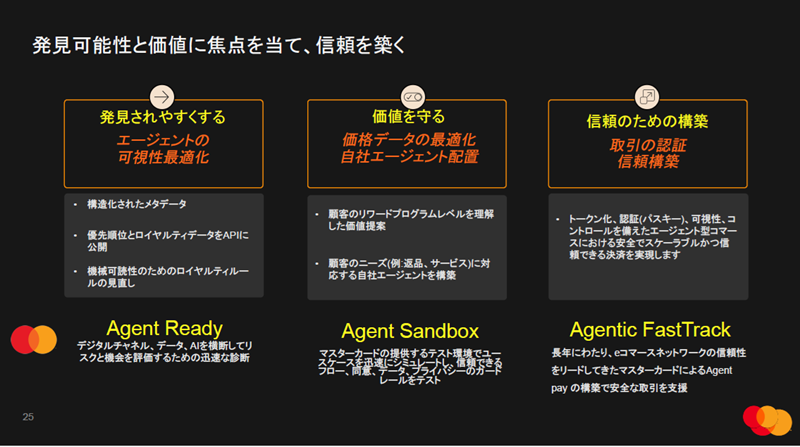
Tanaka: When it comes to tokens and tokenization, the premise is that the Mastercard network converts a dummy 16-digit token back into a card number, so connecting to the Mastercard network—commonly known as Banknet—is essential.Furthermore, in the context of agent-based commerce, Agent Pay will necessarily use MDES tokens. Once AI agents become widespread next year or the year after, it will take time to develop tokens from scratch, so I believe it’s best to implement this foundational token and passkey infrastructure now to avoid falling behind.
Mita: With this in mind, I imagine there are quite a few “on-us” transactions in Japan. In that sense, since connecting to the brand network is necessary this time, transactions from AI agents are viewed as a new channel and will be routed through the brand network as a new form of transaction. The international brands’ intention is to ensure security through this approach.
Tanaka: Looking at the definition of “on-us”—where the Issuer and Acquirer are the same—I believe this practice will continue both now and in the future. However, from the perspective of authorization messages, international brands would prefer that transactions be routed through the Mastercard network so that you can benefit from the latest technologies and performance metrics while building your solutions.
Mita: Thank you very much. With that, I’d like to conclude our presentation from Adyen on the security payment infrastructure and the ecosystem of trust built through networks, with a focus on agent-based commerce. Thank you for your attention.

■Contact
Information  Adyen Japan Co.
, Ltd. 150-0002
2-24-12
Shibuya, Shibuya-ku, Tokyo Scramble Square, 39F