November 20, 2026, 9:52 a.m. (JST)
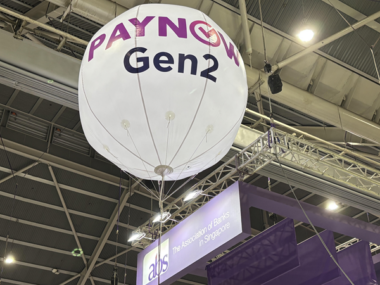
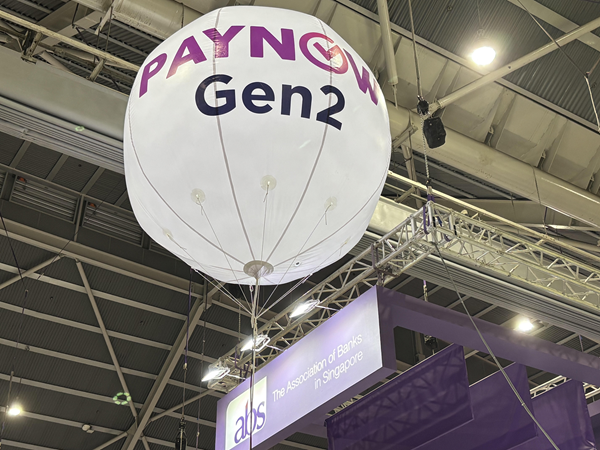
[Singapore] The Monetary Authority of Singapore (MAS) and the Association of Banks in Singapore (ABS) have announced the second-phase roadmap for “PayNow Gen2,” aimed at upgrading the instant payment system “PayNow.”From 2027 through 2028, they will progressively implement measures to enhance the convenience of QR payments, simplify online payments, and support high-value transactions. In the future, they aim to build a next-generation payment infrastructure capable of enabling AI-powered automated payments and programmable payments.
The Evolution of the Real-Time Money Transfer Service “PayNow”
In July 2017, ABS and seven major banks launched the real-time money transfer service “PayNow.” This allowed users to make instant, free transfers 24 hours a day, 365 days a year, using only their mobile phone number or personal identification number (NRIC/FIN), eliminating the need to enter an account number.
In August 2018, ABS and the participating banks launched “PayNow Corporate” for businesses and government agencies. This service enabled businesses and government agencies to make payments using their Unique Entity Number (UEN) or QR Code Payments, dramatically accelerating the shift from traditional paper checks to digital payments in the domestic payment market.Subsequently, in September of the same year, PayNow was integrated with “SGQR,” Singapore’s unified QR code standard, resulting in the rapid adoption of cashless payments even at retail stores and hawker centers.
The service’s ecosystem continued to expand thereafter, and in February 2021, the MAS and ABS opened the network to non-bank financial institutions (NFIs). Consequently, e-money providers such as GrabPay and LiquidPay were also able to join the network.Furthermore, in April of that same year, PayNow connected with Thailand’s “PromptPay,” marking the world’s first cross-border partnership linking real-time payment infrastructures. Through this partnership, users in both countries gained the ability to make instant international money transfers using only their mobile phone numbers.Since 2023, PayNow has been gradually expanding its interconnectivity with payment networks across Asia, including India’s “UPI,” Malaysia’s “DuitNow,” and networks in Indonesia and the Philippines.
In recent years, the operating entities have been working to further enhance security and convenience. In June 2026, ABS and participating banks modified the system specifications as part of fraud prevention measures; the system discontinued the display of nicknames and introduced a mechanism to display the recipient’s real name with certain characters obscured.
Furthermore, in November of the same year, the MAS and ABS announced the roadmap for “PayNow Generation 2,” with both organizations aiming to evolve toward next-generation infrastructure between 2027 and 2028—including the expansion of “SGQR+,” support for high-value government payments, and the standardization of refund rules.
Toward
Improved QR Payment Interoperability (SGQR+) Introduction of Deep Links for E-commerce
With the introduction of the unified QR code standard “SGQR+,” users will no longer need to check which payment services are accepted at each individual store. They will be able to use QR codes from various Merchants through their usual Mobile Wallets, and integration with overseas QR Code Payment networks will also be strengthened. This is expected to improve convenience not only for Singapore residents but also for visiting tourists.The rollout is scheduled to begin with a limited launch in 2027, followed by a full-scale rollout in 2028.
Currently, with PayNow online payments, users may need to save a QR code and scan it with their payment app. Going forward, deep linking will be supported, allowing users to navigate directly from e-commerce sites to their payment apps to complete transactions. A common infrastructure will be established by the end of 2027, with a phased rollout beginning in 2028.
Furthermore, by raising the transaction limit for PayNow, it will become usable for a wider range of purposes than ever before, including tax and government-related payments, receiving subsidies, and high-value money transfers. A limited rollout is scheduled for the second half of 2027, with the scope of eligible transactions expanding starting in 2028.
Strengthening
Dispute and Fraud Response Expansion
of Payment Data Fields
In addition, led by the Singapore Payments Network (SPaN), rules for handling misdirected payments, refunds, fraud, and fraud-related losses will be standardized. This aims to enhance user protection and improve payment security.
Furthermore, it will become possible to attach detailed data—such as invoice numbers, order numbers, transaction IDs, and payment purposes—to payment information. This will make it easier for businesses and government agencies to automate transaction processing and accounting processes, leading to expected improvements in operational efficiency. Implementation will begin in late 2027, with rollout to services starting in 2028 and beyond.
With AI Payments in
Mind Formulation of a Next-Generation Payment Rail Concept
Going forward, the MAS plans to proceed with pilot tests of automated payments via AI agents and programmable payments that execute transactions based on pre-set conditions.
Additionally, in 2027, the MAS plans to formulate the “Future Payments Rails Blueprint.” Building on PayNow Gen2, the plan aims to construct a next-generation national payment infrastructure that integrates multiple payment networks and services.