November 24, 2026, 8:15 a.m. (JST)
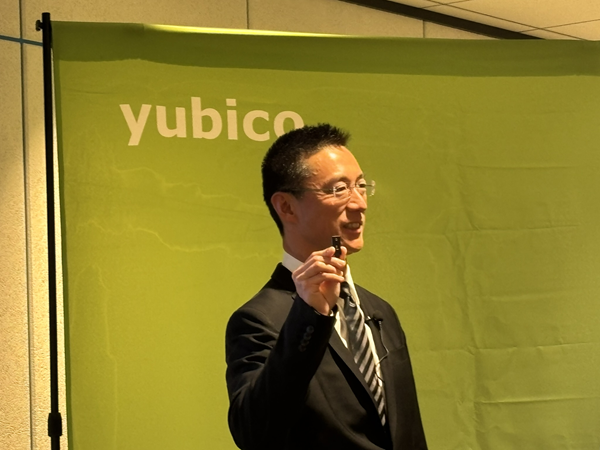
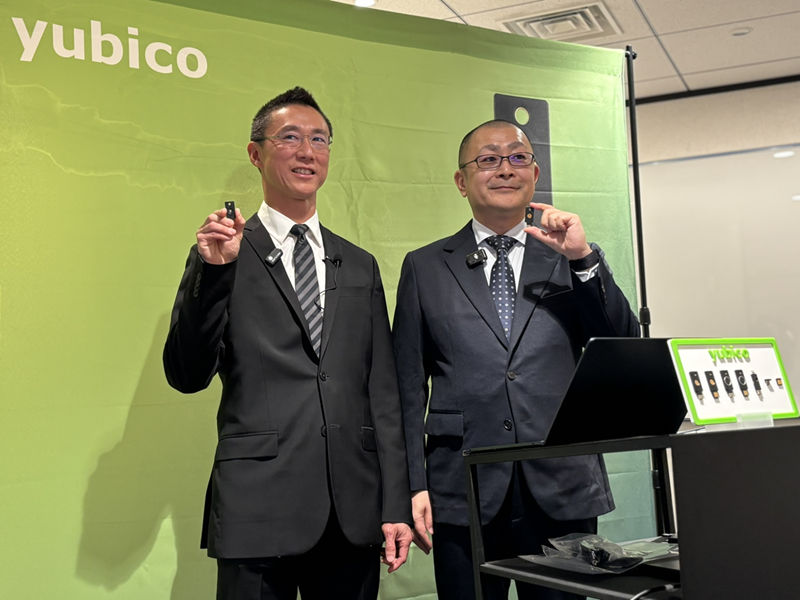
[Japan] Despite Passkey’s recognition rate reaching 87%, more than 40% of organizations on the ground continue to use traditional usernames and passwords. Yubico, a security company headquartered in Sweden and the United States, has released survey results highlighting this “authentication security gap” among Japanese companies.CEO Jerrod Chong visited Japan for a press conference held on November 12, 2026, specifically for the Japanese market.He discussed the latest trends in cyberattacks, which are becoming increasingly sophisticated due to AI; defensive measures using the physical authentication key “YubiKey”; and the company’s future expansion plans in Japan.
Joint Survey
with Okta on Authentication Security Measures Is Japan Lagging Behind the Global Average?
The “Global Authentication Landscape Survey 2026,” a global survey conducted by Yubico and Okta across nine countries, including Japan, highlighted the reality that Japanese companies’ authentication security measures are lagging behind the global standard.
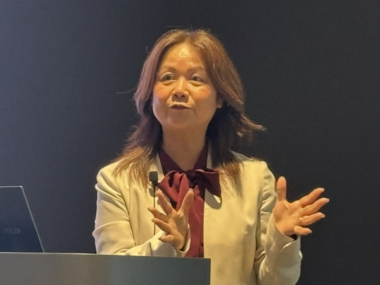
Keiko Itakura, Regional CSO for Japan at Okta Japan, points out, “It has become increasingly difficult for humans to distinguish between AI-generated and genuine content, and security measures that rely on human attention are reaching their limits.”
Video message from Keiko Itakura, Regional CSO for Japan at Okta Japan, 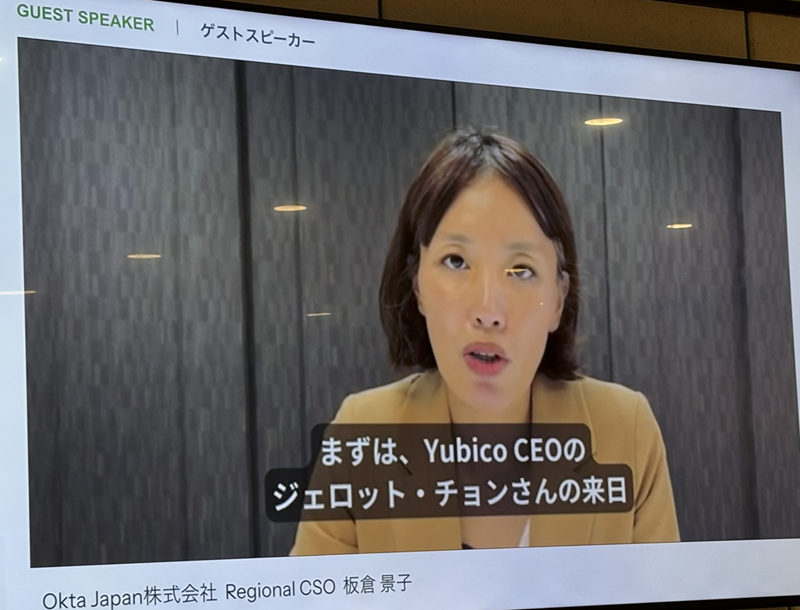
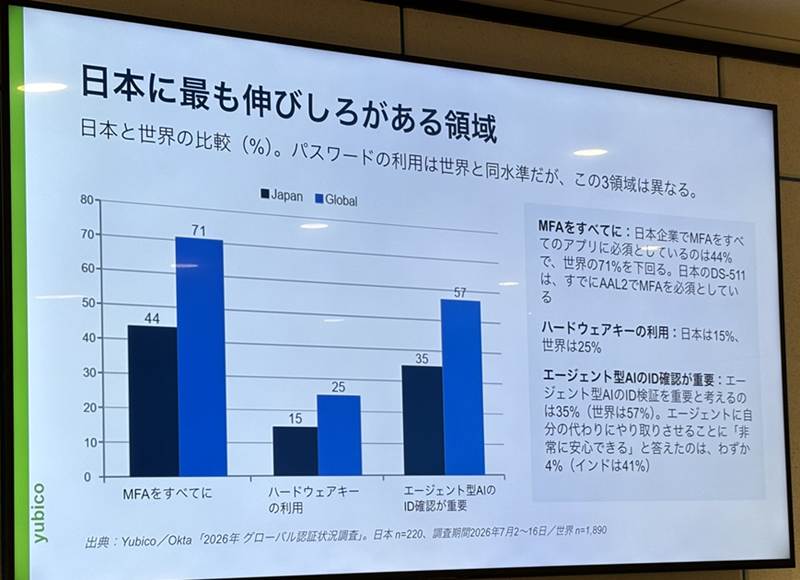
According to the survey, while 87% of IT and security professionals in Japan are aware of passkeys, 43% still use usernames and passwords for work. Furthermore, the adoption rate of company-wide multi-factor authentication (MFA) stood at only 44%, significantly below the global average of 71%.
Commenting on these results, Junichi Otomo, General Manager of the Commercial Sales Department at Yubico Japan, analyzed, “Although technologies such as passkeys, FIDO2, and WebAuthn are widely known, traditional authentication methods continue to be used in actual business operations. There is a significant gap between knowledge and practice.”
Furthermore, in Japan, the percentage of respondents who said they “did not know” whether they had fallen victim to phishing attacks exploiting AI reached 30 percent, significantly exceeding the global average (11 percent).Mr. Otomo stated, “The ability to recognize when you’re under attack is also crucial. We need to reduce the number of people who say they ‘don’t know’ and improve both awareness of the current situation and the countermeasures being taken.”
Cyberattacks
Evolving with AI Defense Through Physical Keys
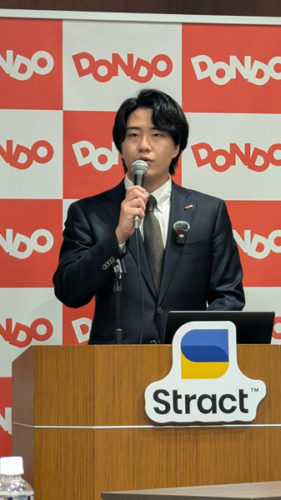
Mr. Jeong, who took the stage next, sounded the alarm, stating, “AI has caused attacks to evolve in three key aspects: ‘speed,’ ‘scale,’ and ‘sophistication.’ While we might have been able to defend against two of these in the past, all three now combine, making it difficult to counter them with traditional defense measures.”“It’s enough for an attacker to find just one vulnerability, but the defense side must maintain constant, effective protection,” he said, emphasizing the need for authentication technology that is resistant to phishing.
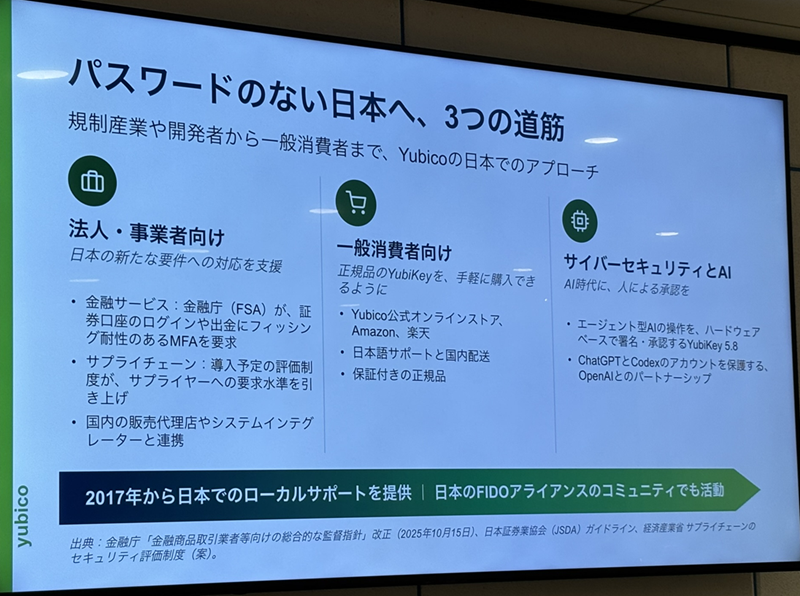
Since launching local support in Japan in 2017, Yubico has been providing services to corporate and business customers as well as general consumers. During the presentation, Mr. Jeong explained a specific attack scenario in which an attacker steals an ID and password from a phishing site and then steals the SMS authentication code to gain unauthorized access.
In contrast, he demonstrated that FIDO-compliant passkeys and YubiKeys—which rely on direct authentication between the legitimate website and the hardware key—can fundamentally prevent attacks by attackers who do not possess the physical key.
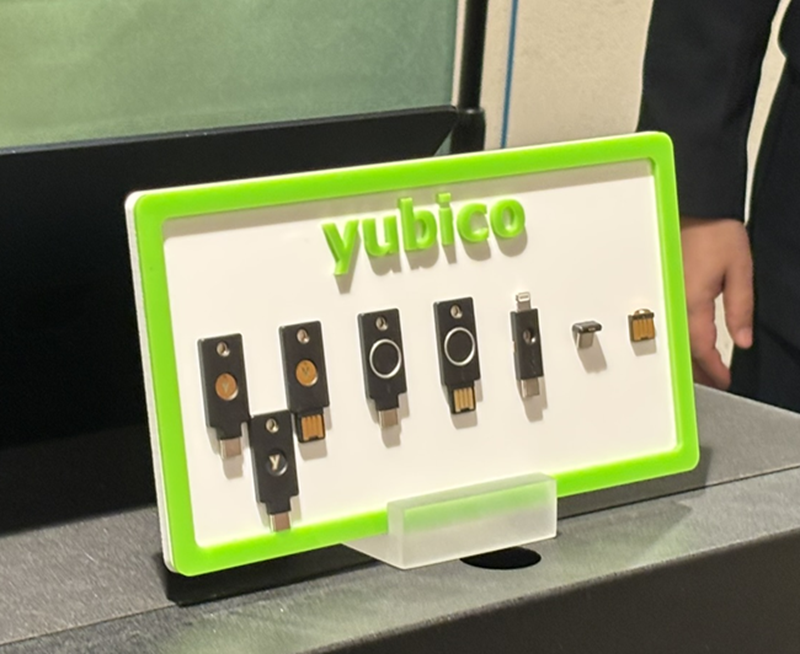
“YubiKey 5.8,”
Designed for the AI Era Collaboration with OpenAI and Support for Post-Quantum Cryptography…
Yubico views Japan as a key market and plans to fully ramp up its efforts to develop the consumer market in addition to its corporate business. The company has already launched its official Japanese website, “Yubico.jp,” and is selling products on Amazon and Rakuten Ichiba.
Mr. Jeong expressed his enthusiasm, stating, “We want to expand not only our business for enterprises but also our business for Japanese consumers, so that more people can protect their digital lives.”He also touched on the collaboration with OpenAI, calling for industry-wide adoption by stating, “Robust authentication is essential not only for AI companies but for all services. Every company should support passkeys and security keys.” The company plans to expand its network of sales agents and increase its workforce in Japan.
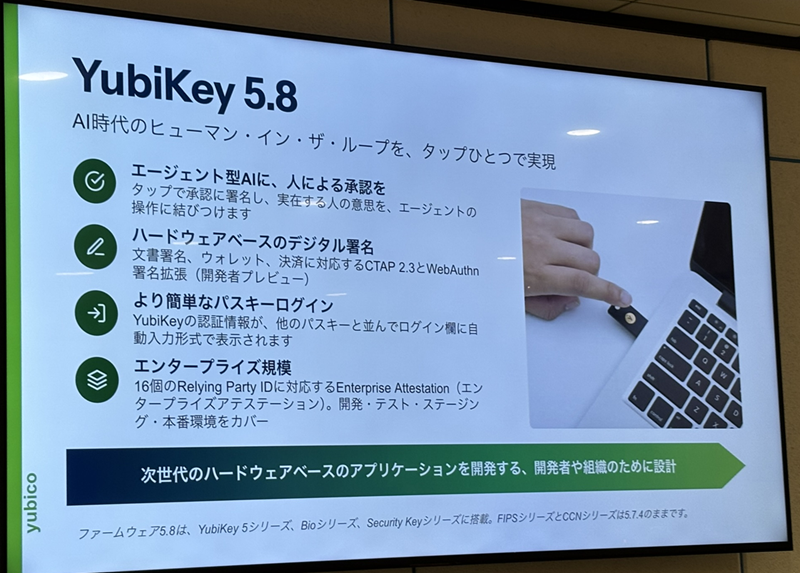
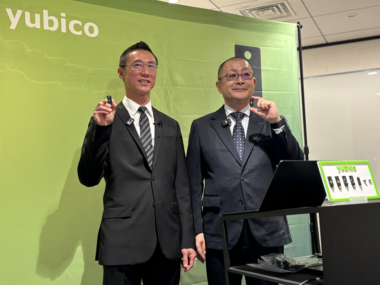
On the product front, he introduced the latest model, the “YubiKey 5.8,” which began shipping this year. Anticipating use cases in the AI era, it supports new applications such as “authorization” and digital signatures in addition to traditional authentication functions.
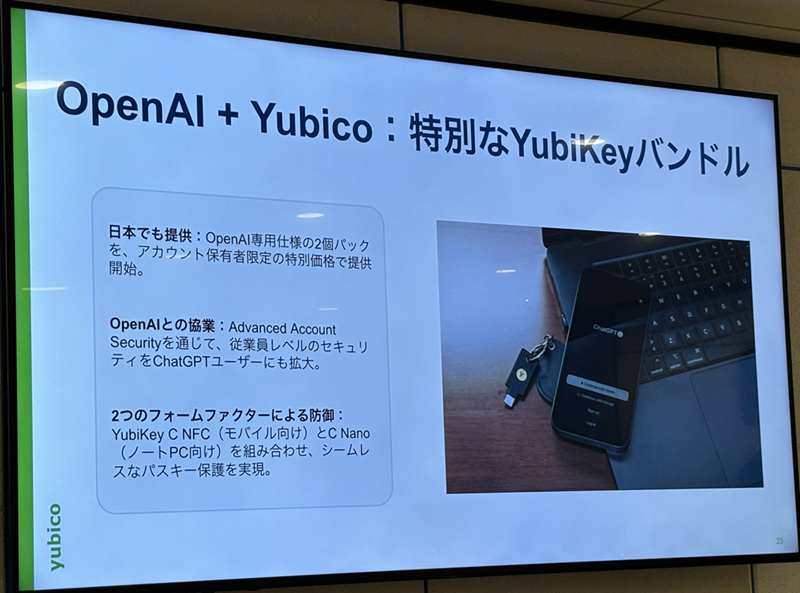
Mr. Jeong explained, “We developed the YubiKey 5.8 with the AI-first era in mind. It covers not only authentication but also authorization, realizing a secure mechanism that incorporates human confirmation.”Mr. Otomo also addressed challenges in the era of AI agents, stating, “In Japan, there has not been sufficient discussion regarding the IDs and authentication methods to be used by AI that performs tasks on behalf of humans. Going forward, authentication and access management for AI will become just as important as they are for humans.”
Furthermore, the company announced a beta version of the “Post-Quantum Cryptography (PQC)-compatible YubiKey,” designed with the future era of quantum computing in mind. Mr. Jeong concluded the press conference by urging, “Quantum computers have the potential to significantly impact current cryptographic technologies. We want companies to start preparing for the transition now.”