November 5, 2026, 11:45 a.m. (JST)
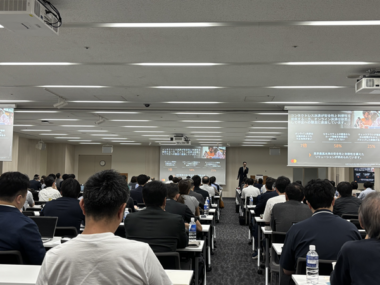
[Japan] KDDI held the “KDDI SUMMIT 2026” on October 27–28, 2026.During the event, the company conducted live demonstrations of “Physical AI” designed for on-site operations in logistics, distribution, and retail at its exhibition booth. The company is also focusing its efforts on the deployment of AI avatars.
Real World, a “Physical AI” startup, showcased a robot equipped with its proprietary robot platform model, the “RLDX-1.” KDDI’s logistics centers are also facing a severe labor shortage and must process a wide variety of daily orders. Additionally, they must handle customers’ valuable products with care.
In the AI-powered packing process, the robot retrieves shipping cartons from a conveyor belt. It smoothly identifies items such as smartphone accessories and cables—which vary in shape and material—and packs them into boxes without damaging them. By utilizing Physical AI, it is also possible to insert cushioning materials tailored to each item.The goal is to create a system where AI can handle the entire process—from the final sealing of the box to moving it to the shipping cart—on its own.
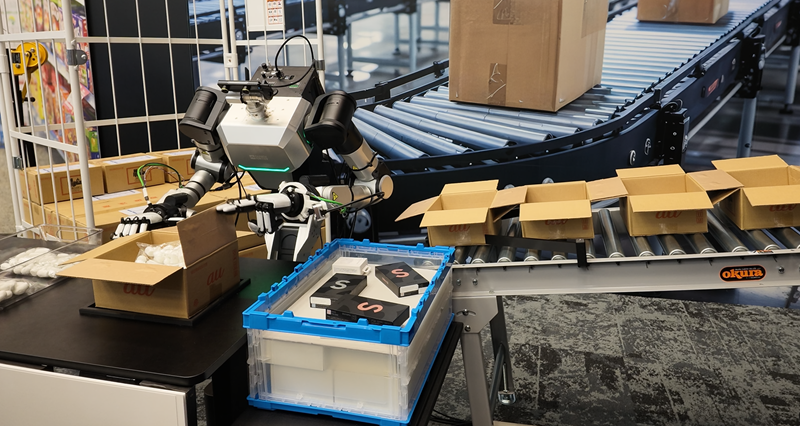
To realize this kind of physical AI, one of the technologies KDDI is working on involves collecting training data for the robots. Workers wear devices that impose minimal burden on them to gather the data necessary for the packing process.The second approach involves using a simulation environment for training, where fixtures and products are realistically replicated within the simulation. By doing so, the company aims to reduce the costs associated with robot training and data collection, thereby facilitating early real-world implementation.
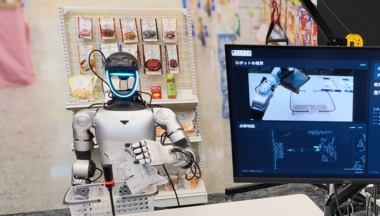
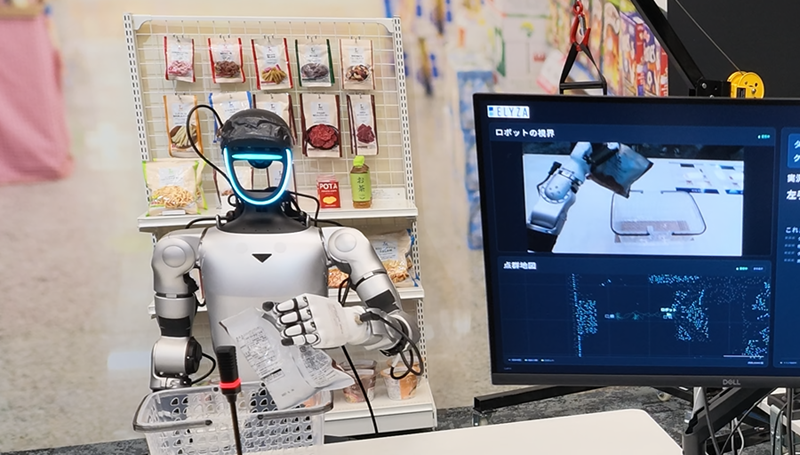
Additionally, in the areas of store digital transformation (DX) and customer service, an AI humanoid conducted a dialogue demonstration simulating customer interactions. When a user uses a microphone to specify the items they wish to order, the humanoid moves to the shelf, retrieves the designated items, and places them in a basket.
The AI humanoid reportedly navigates by confirming its position on a map as it moves.KDDI has reportedly established a new company, “ELYZA Robotics,” in collaboration with the AI startup ELYZA, and is now fully ramping up efforts to introduce robotic foundation models—such as VLA—into real-world settings. For example, the robots are said to be capable of adapting to changes in the layout of the store and acting based on their own judgment of the instructions given.
In addition, the company conducted a demonstration of in-store customer service based on KDDI Avatar Canvas: AVITA technology, showcasing a seamless handoff from an AI’s initial response to a remote operator. Concurrently, starting on the same day, the company began offering the service’s customer service training feature, “AI Roleplay,” to staff at au Style and au Shop locations nationwide.
This service combines functions provided by AI avatars—such as customer service for Riyo-sha and customer service training for store staff—to provide end-to-end support ranging from customer service to staff training.It enables a hybrid customer service model in which AI avatars on in-store digital signage and tablets handle initial interactions with customers, instantly transferring them to remote human operators for specialized plan consultations and other needs.Furthermore, the “AI Role-Play” autonomous training feature—in which AI avatars act as customers in simulated real-world service scenarios—enables the standardization of staff service skills and a significant reduction in training costs without the need for managerial supervision.