August 27, 2026, 8:00 a.m. (JST)
In addition to AI-powered shopping rewards, users can enjoy money-saving benefits in their daily lives
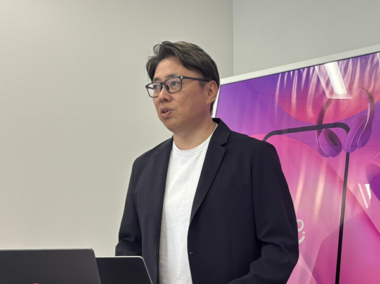
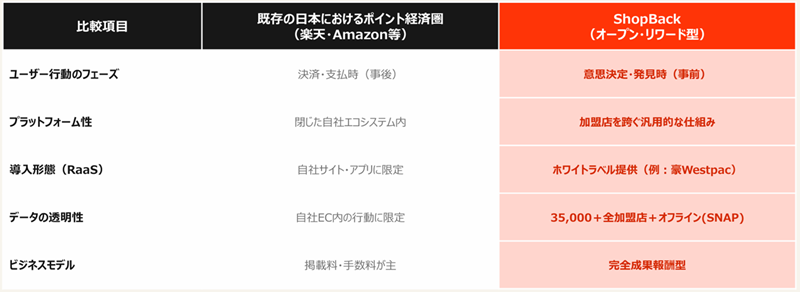
[Japan] “ShopBack” is an AI-targeted commerce platform originating in Asia, boasting a transaction volume of 5.5 billion U.S. dollars across 13 markets worldwide, including the Asia-Pacific (APAC) region.Currently, with a proliferation of various services both offline and online, the user journey has become extremely complex. In Japan, the “points economy”—which operates within ecosystems and includes major national loyalty programs—has been a hot topic; however, ShopBack is distinguished by its open rewards program that spans multiple Merchant partners.We spoke with Henry Chan, co-founder and CEO of ShopBack, about the company’s business model, why major global companies are adopting it, the accelerating trend of AI shopping in Europe, the U.S., and Asia, and the rationale behind strengthening its B2B business in Japan.

Rewards Platform Provider
Growth Driven by the “Search → Choose → Earn & Save → Pay” Cycle
Henry said, “ShopBack is the No. 1 rewards platform in the APAC region. We hold the top position in all these markets, from Singapore, Malaysia, Thailand, the Philippines, and Vietnam to Australia and New Zealand.”With over 20 million active members, the platform has helped members save more than 1 billion Singapore dollars. Additionally, the platform features over 20,000 active Merchants and brands, generating more than 1 million shopping transactions per day.Furthermore, the company has secured substantial funding from major investors such as Temasek (a Singaporean government-backed fund), Rakuten, SoftBank, and Credit Saison.
ShopBack helps users find, select, save, and pay for products. The company’s vision is to make every day more fulfilling, and it helps members save money and time while enjoying the experience every time they use the service.
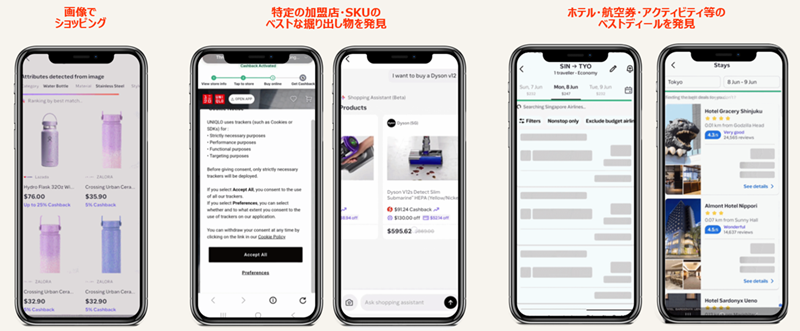
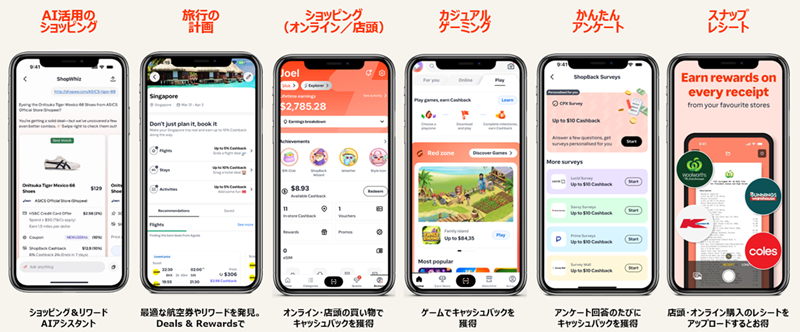
The company also supports merchant partners in expanding their businesses cost-effectively. The foundation of this approach lies in leveraging AI to develop products and maximizing the use of data to deliver value to both users and merchant partners. The company offers apps and web platforms that help users save time and money across a wide range of categories, from travel and shopping to offline activities.It also features image-based shopping and AI-powered recommendation functions.
Partnerships
with over 35,000 brands and stores Developing AI tools to save money and time
For example, money earned through the ShopBack app can be transferred to a bank account. The company has partnered with over 35,000 brands and retailers. For instance, on apparel websites, users can receive benefits such as 7% cashback on their purchase amount. While similar to Japan’s point systems, the service also has its own unique features.
“We’re developing AI tools that help users save money and time,” says Henry. “For example, when searching for a flight from Tokyo to South Korea, our technology searches 15 different retailers to find the lowest price or the best deal. Users don’t need to open multiple apps to compare prices—our technology helps them save both time and money.”
Additionally, if a user wants to buy a chair online, they can take a photo of the chair they like and search for it; the system will then display multiple retailers, allowing them to compare products. “Because users can compare and choose, this saves them both time and money,” said Henry.
Highly Accurate User Profiling is Possible
Services Also Available to B2B Players
ShopBack says it tracks what users are buying across a wide range of categories, including electronics, fashion, travel, and purchases at Physical Stores. As a result, the company can understand who its users are and provide better recommendations for both users and brands.Since ShopBack can analyze customer data across various brands and categories, “This is our greatest strength,” Henry says confidently. “Even though users haven’t registered any personal information, we can gain detailed insights into who they are simply by observing their shopping behavior.”By being able to infer highly accurate user profiles—including age, hobbies, and whether they have children—the company can provide highly relevant recommendations that span multiple categories.
Looking at ShopBack’s user demographics, 60 percent are women, and the user base is growing steadily year over year.
In addition to its own B2C app, ShopBack also provides services to B2B players, including major companies such as banks and telecommunications firms. For example, Westpac, one of Australia’s largest banks, has announced that by partnering with ShopBack, its customers have saved more than $10 million.When a user makes a purchase on Amazon through Westpac, Westpac also earns a profit, and Westpac and ShopBack split the revenue.
Focus
on B2B in the Japanese Market With an Eye Toward Partnerships with Major Rewards Programs
In the Japanese market, however, the company currently has no plans to launch B2C services and will focus on B2B.The company plans to partner with Japanese brands to help them sell their products in the APAC market and worldwide. While it already partners with Japanese companies such as Uniqlo, Sony, ASICS, and Rakuten, it aims to expand this network further. This will support the global expansion of Japanese companies.
Second, similar to Westpac, the company aims to build partnerships with other banks, telecommunications companies, and major ecosystem players.Overseas, the company is already engaged in similar initiatives with a telecommunications company in Singapore and one of Malaysia’s largest digital wallet providers. It is currently seeking major ecosystem players in Japan with whom it can collaborate to drive growth. The company aims to provide services through these major Japanese ecosystem players and reach their users.
Henry said, “In Japan, players in the points ecosystem are very large and powerful, with user bases ranging from 20 million to 100 million. I think it would take time to build such a large user base as a B2C business. However, if we support B2B businesses, I believe we can expand our reach in the Japanese market in a different way.“Partnerships are a key part of our strategy in Japan. We want to provide technology to support the success of major ecosystem companies and, furthermore, help Japanese brands grow overseas,” Henry said.
Overseas, the company operates in Australia, Singapore, and Malaysia, among other markets, but notes that none of these markets have a points system as robust as Japan’s. “Points systems are extremely popular and widely adopted, and I believe the technology we possess is very powerful in making the points experience even more appealing to users,” said Henry.By partnering with major points operators, the company can expand its services to include rewards, images, and flight searches, making the points app even more appealing.
Although major point exchange services already exist in Japan, Henry expressed his enthusiasm, saying, “We always welcome competition, and we intend to provide services that are superior to those of our competitors and continue to innovate for the benefit of both users and Merchants.”